
Sustainable growth and value strategy 2027-2031
Introduction
Wales’ natural environment is one of our greatest assets. It shapes our communities, powers our economy, supports our well-being, and inspires our sense of place.
At Natural Resources Wales, we’re proud to look after these landscapes, waters, and woodlands on behalf of the nation - so they continue to thrive today and long into the future.
Every day, our work helps protect the places and natural resources that matter most to people in Wales. We help safeguard communities from flooding, care for habitats and wildlife, and keep air and water clean.
We also manage and care for the 120,000 hectares of land in the Welsh Government Woodland Estate on their behalf. These places enhance nature, store carbon, provide timber, offer space for adventure and reflection, and support thousands of jobs across Wales.
Our purpose is simple: nature and people thriving together.
It’s the heart of our Corporate Plan to 2030 and well-being objectives. By 2030, we want to see:
- nature recovering
- communities growing more resilient to climate change
- pollution minimised.
To help make this happen, we are launching this Sustainable Growth & Value Strategy 2027–2031.
It shows how we will grow income and increase the benefits we deliver.
This will allow us to reinvest more directly into nature, climate action, and community well-being. This is not about making money for its own sake. It is about making every pound and partnership deliver more for Wales and its communities.
The strategy is shaped by the people who use our land and services. We tested our ideas with customers and stakeholders in early 2026, and their insight helped sharpen our ambition and focus.
This strategy is confident and practical. It shows how we will make the most of the land we manage, support Wales’ climate and nature goals, and help build a greener, fairer economy. We will do this by working with partners, communities, and industries across Wales.
Our objectives
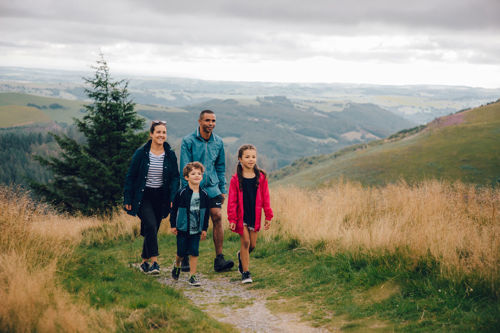
Our strategy aims to:
- show how we look after our natural resources and the land we care for in a sustainable way (SMNR - the sustainable management of natural resources)
- explain how commercial activity supports our Corporate Plan to 2030 and well-being objectives
- ensure we provide value for money for the public, support nature’s recovery, improve community access and build a stronger, greener economy, while ensuring our natural resources are protected (green growth).
Across our work, we will always prioritise safety and protecting the environment. We will follow the principles of the Sustainable Management of Natural Resources (SMNR) and then respond to market needs.
These objectives help us meet key legal duties as set out in the Environment (Wales) Act 2016, The Natural Resources Body for Wales (Establishment) Order 2012, and the Forestry Act 1967.
They also contribute to delivering our legal duties around well-being and protecting our future generations as set out in the Well-being of Future Generations (Wales) Act 2015.
Expectations for us as a sponsored body, are set by the Welsh Government.
Our objectives are designed so they can adapt and align to the Government’s programme of work. This helps us tackle the climate and nature emergencies to benefit our communities in Wales.
They support the Welsh Government’s aim to protect 30% of land and sea for nature by 2030 (“30 by 30”). Our objectives do this by helping us manage land in the right way, restore habitats, and work with partners to protect nature at scale.
By working towards these objectives, we will also meet woodland management standards and certifications, which improve the forest environment for people, nature, and the industry.
Our work on the all-Wales action to increase renewable energy will support growing the economy whilst protecting nature (green growth) in Wales. This helps tackle the climate and nature emergencies.
We have checked this strategy to make sure it works well with our other plans.
Our State of Natural Resources Report (SoNaRR) is a national report that shows how nature in Wales is doing and what needs to change to protect it and make it stronger for the future.
Our 2025 report calls for major changes to restore nature, increase resilience, and build a fair economy that renews and strengthens the natural systems we rely on.
The Bridges to the Future chapter in SoNaRR calls for Wales to turn evidence into real action. Our sustainable growth and value strategy is part of our action to ‘build a regenerative economy’.
Our strategy also helps us secure funding for our Corporate Plan, well-being goals, and national commitments. Traditional funding alone is no longer enough, so we will explore other ethical and suitable funding options, avoiding a one-size-fits-all approach.
This is in line with our financial strategy to operate a balanced budget and secure finances in support of our core mission.
We will follow our Procurement and Contracts Strategy 2026-2031. This covers fair work, equality, and diversity; modern slavery prevention; value for money; and governance, compliance, and innovation.
We work in different ways to benefit distinct communities in regions or places in Wales: Marine, South East, South Central, South West, Mid, North East and North West. These areas have ‘place plans’ to consider the unique needs and opportunities in each area. We provide commercial support alongside colleagues in these teams.
In summary, our commercial activities support our environmental and social responsibilities. As our commercial work grows, it helps us create more value.
This means greater benefits for nature, communities, and the economy across Wales.
How we will deliver our strategy
Our approach will be place-focused. Decisions about land use will start with what is safe and right for each place. This means we will prioritise safety and environmental protection first, follow SMNR principles, and then consider market opportunities.
Between 2027 and 2031, we will focus on four main areas.
- Business development - We will deliver new opportunities for innovation, investment that support nature and climate (green finance) and process improvement. We will also define our role in the Welsh Government’s rural land map and land-use plan.
- Commercial and recreation - We will support inclusive and sustainable outdoor access on suitable land we manage. Income from commercial recreation will be reinvested locally on the Welsh Government Woodland Estate, as set out in our Recreation Strategy 2024–2030.
- Renewable energy - We will support the growth of renewable energy by working with Trydan Gwyrdd Cymru and other developers. We will take an open and inclusive, whole-system approach.
- Timber sales and marketing - We will give clear assurance on timber supply for customers and wood processors and maximise the social and environmental value of the Welsh Government Woodland Estate.
The next chapters explain our role in each of the four areas and how we plan to deliver.
The detail of what we will deliver and how we will measure ourselves is included in four plans in the focus areas above to support delivery of this strategy.
Our Commercial Team will oversee the strategy and action plans. We work alongside all colleagues and teams to add growth and value to the work we do by bringing commercial expertise where it is helpful.
All activities, planned and reactive, will align with Corporate Plan to 2030 and well-being statement, and will meet legal requirements.
Our work supports growth and adds value. It helps us meet our well-being objectives in the following ways.
How we meet our well-being objectives
Nature is recovering
How we manage and harvest timber helps nature recover and thrive. For example, we thin woodlands so trees can grow healthy and strong and use continuous cover forestry, where possible, so forests stay covered with trees. We restore native woodland habitats for wildlife. We support renewable energy projects on our land, with plans in place to protect nature as part of these projects. We also improve paths and access to land in our care so that people can connect with nature.
Communities are resilient to climate change
Our work helps communities prepare for the future. The timber we harvest is a renewable, green material. It is used for building Welsh homes and helps store carbon instead of releasing it into the atmosphere. We support renewable energy projects on land in our care. This provides clean and secure green energy across Wales. We also support community renewable energy schemes. This all helps grow the economy and creates new skilled green jobs for the future.
Pollution is minimised
Our work helps reduce pollution and improve air quality. By supporting renewable energy, we reduce the need for fossil fuels. We make sure developments are built in the right places and in the right way. This supports the growth of renewable energy in Wales and helps move towards a net zero, low-carbon society. Across all our work, we will reuse and regenerate materials wherever possible, following circular economy principles. This approach will be built into all our activities.
Engagement and collaboration
We will keep working with colleagues, partners, stakeholders and communities to share knowledge, build trust, and work towards shared goals.
We work closely across a range of Welsh Government areas, including
Rural Resilience and Sustainability, Enterprise, Connectivity and Energy, Local Government, Housing and Planning, and the Sponsorship Team.
Internally, we continue to work closely with a variety of departments and subject matter experts. This helps us meet legal requirements and/or risk management into our processes, agreements, and contracts.
Managing risk, seizing opportunities, and looking ahead
Our strategy takes a proactive and flexible approach to managing risks. This helps us stay strong and ready for new challenges and opportunities in Wales or globally.
By looking ahead and identifying issues early, we can adapt the way we work, meet legal requirements and deliver our corporate plan.
SoNaRR 2025 highlights key risks and the need for major change across all sectors. This Strategy supports the “building a regenerative economy” bridge in the Bridges to the Future chapter.
Our timber sales and marketing plan 2027-2031 also includes backup plans for the possible effects of climate change, strong winds, fires, pests, and diseases.
Across all our work, we will make decisions that balance opportunity and responsibility. We will take sensible risks when they help us achieve our goals.
We want to build a culture that encourages creativity and new ideas. We will support our team and colleagues to think boldly and try new approaches. If something does not work as well as we hoped, we will treat it as a chance to learn and improve.
Business development plan
Context and how we will work
We will deliver new and innovative business opportunities using a mix of funding sources.
This may include combining core funding with grants, partnerships, contracts, and other external sources. This means we will not rely on just one type funding.
Ideas, and potential business cases, will need to be viable and realistic. We will assess all proposals using our Sustainable Management of Natural Resources Toolkit.
We will work with the Welsh Government to drive business development activities together.
Key commitments for 2027-2031
Innovation
- We will deliver new and innovative ideas for our activities, including investment that supports nature and climate (green finance), managing the land and resources in our care (asset management), and improving commercial business process.
Green finance including supporting woodland creation growth
- We will develop an action plan to address recommendations made from the: Trees and Timber Deep Dive (GOV.WALES) and opportunities to grow the Welsh Government Woodland Estate, that meet the Welsh Government’s ambitions for the forest network.
Sustainable land use
- We will support key stakeholders in identifying ways to increase and improve the quality of the Welsh Government Woodland Estate.
- We will contribute to the Welsh Government rural land map and land-use plan and clarify our role in enabling sustainable commercial development opportunities on land in our care.
Case studies
- We will publish case studies to show what we have achieved and what we have learned. These will help build confidence, encourage innovation, and support future opportunities. Each case study will show how our decisions support well-being and nature recovery.
Pilot schemes & co-funding
- We will develop pilots for innovative approaches to the management of the Welsh Government Woodland Estate and National Nature Reserves.
- We will invite others to work with us and help design funding models between the public and private sectors.
- We will look for income generating opportunities that deliver on the Well-being of Future Generations (Wales) Act 2015 and our duties to sustainably manage our natural resources.
- We will ensure that green investment is in keeping with the Welsh Government Sustainable Investment Principles, supports 30x30, and strengthens ecosystems to stay healthy and recover.
Investment appraisal
- We will create a financial appraisal tool to help us assess investments and make good decisions about new funding opportunities. This will follow Welsh Government Sustainable Investment Principles and use a natural capital and carbon investment approach.
Investor ready schemes
- We will create a set of investment-ready projects, which support nature and climate (green finance) for the land we manage. This will include creating the right financial processes to find investment partners, while ensuring value for money, carrying out proper checks, and managing risk. This approach will support wider economic growth and help secure long term investment in the land we care for.
Commercial recreation plan
Context and how we will work
Our commercial recreation plan will focus on enabling inclusive, sustainable outdoor access to benefit people’s well-being while protecting nature, in line with our Recreation Strategy 2024–2030.
We will shift from providing commercial recreational activities ourselves to partnership delivery. We will use a mixed economy model – this means bringing together private enterprise and Welsh Government support to provide public services and benefit communities.
We are open to exploring new, innovative, and viable recreational ideas for the Welsh Government Woodland Estate. The estate is open for walking and, in most places, for cycling and horse-riding.
Some of the estate is held as leasehold, which means recreation access may be restricted. Recreation access and commercial activities may require landlords’ consent and will demand negotiations with them.
We already allow commercial horse-riding activities in some forest areas, and we are committed to a continuing these arrangements for the length of contracts.
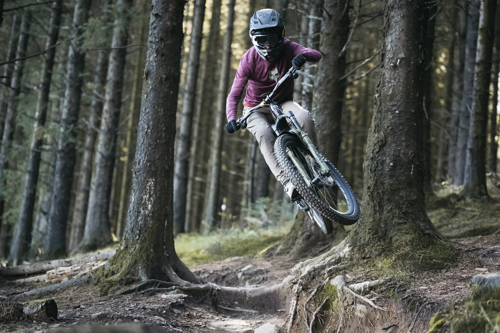
Photo courtesy of BikePark Wales
Key commitments for 2027-2031
Pipeline and re-investment
- We will look for new commercial opportunities to enhance and expand our recreational offer on land in our care.
- Where income is generated from the Welsh Government Woodland Estate, we will re-invest income back to local forests.
Benefit-based prioritisation
- When we review new recreation proposals, we will prioritise those that benefit local communities and support good management of the Welsh Government Woodland Estate.
Visitor Centres
- We will enable other organisations or businesses to run the two visitor centres (and potentially surrounding areas), at Bwlch Nant Yr Arian and Coed y Brenin. This will enhance the visitor experiences whilst protecting nature.
Media and filming offer
- We will enhance our current offer of media and filming opportunities on the land in our care.
- We will review our operating model and fee structure, to align to our Recreation Strategy and the Welsh Government’s film and media policy.
Case studies
- We will publish case studies to show what we have achieved and what we have learned. These will help build confidence, encourage innovation, and support future opportunities. Each case study will show how our decisions support well-being and nature recovery.
Complementing our Recreation Strategy 2024-2030
- Our commercial recreation focus aims to complement and not compete with our Recreation Strategy. We will work with our place-focused teams to enhance and support our work in regions of Wales.
Renewable energy
Context and how we will work
We manage the Welsh Government Woodland Estate on behalf of the Welsh Government. This includes enabling renewable energy schemes on the public forest estate to support a sustainable future.
Renewable energy on the land we manage can help us use resources sustainably, help address the nature emergency, and contribute to economic growth and creation of skilled jobs.
We will continue to manage the existing commercial agreements for renewable energy schemes on behalf of the Welsh Government. We support landlord and tenant relations, provide sound financial accounting, and maintenance of our built assets.
We already work closely with existing renewable energy companies, developers, and Trydan Gwyrdd Cymru. This is a publicly owned company established by the Welsh Government to develop renewable energy projects on the Welsh Government Woodland Estate.
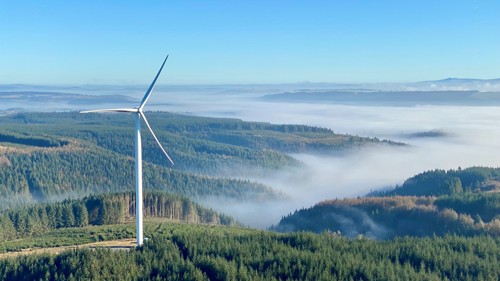
Photo courtesy of RWE
Key commitments for 2027-2031
Growth
- We will continue to support and manage all existing renewable energy schemes across the Welsh Government Woodland Estate.
Exemplar agreement with Trydan Gwyrdd Cymru
- We will strengthen our working with Trydan Gwyrdd Cymru to enable further renewable energy schemes on the land in our care.
- We will implement our Sustainable Management of Natural Resources Toolkit and develop a best practice land-use agreement with Trydan Gwyrdd Cymru to show how renewable energy development can work well with land and nature.
Delivery of existing schemes
- We will enable and support the three current Trydan Gwyrdd Cymru forecasted schemes. These are Clocaenog Dau, Denbighshire; Glyn Cothi, Carmarthenshire; and Carreg Wen, Rhondda Cynon Taf.
New partnerships
- We will continue our work with other developers and community groups for renewable energy schemes on the Welsh Government Woodland Estate. These will meet high environmental standards and align with the Welsh Government’s National Energy Strategy and Energy Sector Deal.
Case studies
- We will publish case studies to show what we have achieved and what we have learned. These will help build confidence, encourage innovation, and support future opportunities. Each case study will show how our decisions support well-being and nature recovery.
Performance reporting on current and future schemes
- We will publish data on renewable energy (e.g. mega-watt outputs, financial reporting, and woodland creation delivery) on the Welsh Government Woodland Estate. This will demonstrate the value in renewable energy schemes.
Project forecasts to 2031
- We will publish a forecast of our target energy projects on the Welsh Government Estate.
- Each scheme will be evaluated using our Sustainable Management of Natural Resources Toolkit. This is so we can show how energy projects support the sustainable management of our natural resources while contributing to economic growth and value for Wales.
- We will work with the Welsh Government to understand the benefits of a Wales-wide approach to renewable energy on the Welsh Government Woodland Estate. This will include exploring possibilities for new grid infrastructure and assessing benefits and impacts.
Developer’s Handbook
- We will publish a Developer’s Handbook, alongside our action plan, to support developers who wish to collaborate with us. This will set out standards required, including habitats regulation assessment, and information on our decision-making.
Financial forecasting tool
- We will develop a tool to forecast renewable energy income from the Welsh Government Woodland Estate. This will help us make sure our plans are financially sound and manage our resources responsibly.
Simplified governance
- We will look for ways to simplify and streamline governance procedures where appropriate, to improve responsiveness and efficiency.
Timber sales and marketing
Context and how we will work
The Welsh Government Woodland Estate is a national woodland resource. We manage it to provide environmental, economic, social, and cultural well-being benefits for the people of Wales and beyond, now, and for future generations.
The estate helps to tackle climate change by storing carbon. It also provides valuable habitats for plants and wildlife and offers space for recreation. It provides a good supply of timber, which supports employment and rural livelihoods.
We have developed a timber sales and marketing plan 2027-2031 to show how we will deliver the commitments in this area of our strategy.
A steady timber supply is essential for the long term future of the Welsh sawmilling and wood processing sector.
We welcome the Welsh Government’s Timber Industrial Strategy 2025. This sustainable growth and value strategy, along with the timber sales and marketing plan 2027-2031 will outline what and how we contribute to each of the targets assigned to us at Natural Resources Wales.
The GB Forest Research Production Forecast of the timber sector informs the volumes we commit to offer to the marketplace, through our forest resource plans.
Our forest resource plans take a balanced approach to managing the Welsh Government Woodland Estate. They follow our legal duties and reflect our area statements and local well-being plans. They also show good practice in how we manage and protect important sites and features on the land we care for.
We manage the Welsh Government Woodland Estate to the UK Forestry Standard. This is audited annually under the UK Woodland Assurance Standard (UKWAS).
We retain independent verification from both the Programme for the Endorsement of Forest Certification (PEFC) and the Forest Stewardship Council (FSC ®). This demonstrates a continued improvement to the forest environment for people and nature and provides confidence to the forest industry.
UKFS states: "Sustainable forest management is the stewardship and use of forests and forest lands in a way and at a rate that maintains their biodiversity, productivity, regeneration capacity and vitality, and their potential to fulfil, now and in the future, relevant ecological, economic and social functions at local, national and global levels, and that does not cause damage to other ecosystems."
UKWAS adds: "Responsibly managed UK woodlands that are healthier, more abundant, more diverse and which deliver a wide and sustainable range of benefits for society, the economy and the environment."
Carefully managing the Welsh Government Woodland Estate can make a big difference to the well-being of people in Wales. Healthy forests help create healthy communities by storing carbon, which improves and protects our environment. We will also help build a stronger more skilled forestry workforce now and for future generations.
We can only achieve this by working in collaboration with the Welsh forest industry and wood processors.
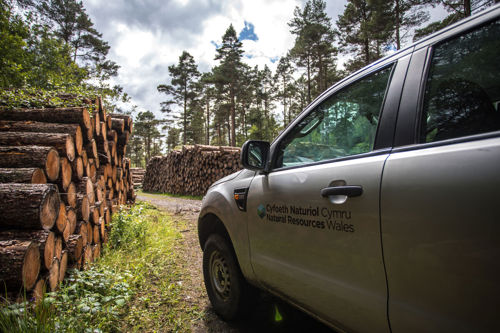
Key commitments for 2027-2031
Governance standards
- We will continue to manage the Welsh Government Woodland Estate to the UK Forestry Standard (UKFS), audited annually as set out in the UK Woodland Assurance Standard (UKWAS).
- We will retain independent verification from both the Programme for the Endorsement of Forest Certification (PEFC) and the Forest Stewardship Council (FSC ®).
- We will apply and evolve our Timber Sales Governance Standard, to secure safe, accessible, fair, open, competitive, and transparent sale of timber.
Market volume
- We will work to increase the amount of timber we bring to market from the Welsh Government Woodland Estate, during this plan.
- We will identify where more investment on the Welsh Government Woodland Estate is needed to help the industry access greater amounts of timber. This will include an action plan for new forests roads and better access, new funding proposals, and other opportunities.
Production and forecasting
- We will keep timber production as a key aim in our Forest Resource Plans so we can regularly assess the timber growing on the Welsh Government Woodland Estate.
- We will continue to provide an accurate timber production forecast to support investment and growth in the timber processing industry. This is balanced with sustainably managing our natural resources.
Market value commitment
- We have committed to a timber volume for market. This was based on what can be done safely and sustainably in each place. We prioritised safety, protecting the environment and following SMNR principles, aligned to the GB Production Forecast 2026-2031. This gives confidence to the wood processing sector while still improving the environment for nature and people.
- We will assess the wider social and economic impacts of our timber sale models. This includes finding the right balance of roadside sales and support for SME and micro-sawmillers across our regions.
- We will encourage investment for specialist equipment and job skills, which will support the future of the forestry sector and our rural communities.
Sales and marketing
- We will continue to use standing timber sales as our main, preferred contract model, using direct production only when we need more control.
- We will run open-tender eSale events during this plan and look at other ways of selling timber. Our sales programme will focus on activities driven by market demand.
Resilience
- We will develop flexible risk plans for significant events, such as in plant health, windblow, and markets, and to involve collaboration with contractors and processors.
- We will publish a Restocking for Resilience Statement for the marketplace, working with Forest Research on trials of wider productive conifer species.
Safety
- We will work in partnership with the forest sector to continually prioritise and
improve standards of safety, health, and well-being.
Partnership working
- We will continue working with colleagues, partners, stakeholders and communities to share knowledge, build trust, and work towards shared goals.
Performance reporting
- We will publish regular updates on the Timber and Marketing Plan to maintain confidence in supply. Our reporting will include timber sales performance, thinning programme delivery, restocking performance, and our woodland creation programme expanding the Welsh Government Woodland Estate.
- We will use measures to assess our performance.
Communication
- Our sales managers will continue regular communication with customers.
- We will also run our annual timber trade liaison event and look for more ways to work with the timber sector.
Monitoring and market performance
- We will keep track of how the timber market is performing and how well our timber is selling.
- If we have already sold too much timber ahead of time (more than 150% of what we normally offer each year), we may reduce future sales. This helps prevent settling too much and keeps the market fair and stable. We understand that global and political changes can affect the UK timber industry. By offering timber regularly and at current market prices, we help support a strong and reliable timber sector now and in the future.
Conclusion
Our Growth and Value Strategy explains how we will grow our income and increase the benefits we deliver, while staying true to our environmental purpose.
Traditional funding on its own is no longer enough to meet the challenges we face. To help nature recover, support resilient communities, and reduce pollution, we need to change how we work and how we fund our activities.
By developing new ideas, encouraging responsible investment, and making the most of the land we manage, we can secure more sustainable funding for the future.
Our focus areas (business development, commercial recreation, renewable energy, and timber sales) will give us a strong and balanced approach to generating income.
Above all else, growth will support nature, benefit communities and helps us deliver our purpose: nature and people thriving together.
Other places in Strategies, plans and policies

Last updated